You’re exhausted. You’ve been yawning since 8 p.m. And yet here you are at 11:47, staring at the ceiling, wide awake, wondering why your body won’t just cooperate. This is one of the most common — and most misunderstood — sleep complaints there is: being tired is not the same as being sleepy, and the hour before bed is usually where the two get disconnected.
The good news is that this particular hour is also the most fixable part of your entire sleep routine. You can’t control your work stress at 11 p.m. or rewind a bad night’s sleep from three days ago. But you can control the light in your room, the temperature of your bedroom, and what your mind is doing right before you close your eyes — and each of those has a measurable effect on how fast you actually fall asleep.
Quick Answer (TL;DR)
Your last hour before bed should be dim, cool, and boring — on purpose. Blue light from screens delays melatonin release and pushes your body’s clock later (Sleep Foundation). A bedroom held around 65-68°F helps your core temperature drop the couple of degrees your body needs to initiate sleep (Sleep Foundation; Cleveland Clinic). And a racing mind is best handled by getting it out of your head — through journaling, or by getting out of bed entirely if sleep isn’t coming (AASM). None of this requires new equipment. It requires about 60 minutes and a bit of discipline.
Key Takeaways
- Blue light suppresses melatonin release, tricking your brain into thinking it’s still daytime even when you’re exhausted (Sleep Foundation).
- 65-68°F (18-20°C) is the range most sleep clinicians recommend for a bedroom, because your core body temperature needs to drop slightly to trigger sleep onset (Sleep Foundation).
- A dark, cool, quiet room is one of the CDC’s core recommendations for better sleep, alongside a consistent bedtime (CDC).
- Consistent background noise can mask disruptive sounds that would otherwise cause brief awakenings, though the research on how much it helps is still mixed (Sleep Foundation).
- If you’re still awake after 20 minutes, get out of bed — lying there frustrated teaches your brain to associate the bed with wakefulness instead of sleep (AASM).
- You don’t need a lab to know if any of this is working. A phone-based sleep tracker can show you, night over night, whether your wind-down routine is actually shortening how long it takes you to fall asleep.
Step 1: Eliminate Blue Light Exposure to Boost Melatonin
The single biggest lever in your last hour is light, and specifically the blue-toned light coming off your phone, laptop, and most overhead LEDs. Blue light suppresses your body’s release of melatonin, the hormone that makes you feel drowsy, and light exposure within roughly two hours of bedtime can meaningfully disrupt your sleep-wake cycle by tricking your brain into thinking it’s still earlier in the day (Sleep Foundation).
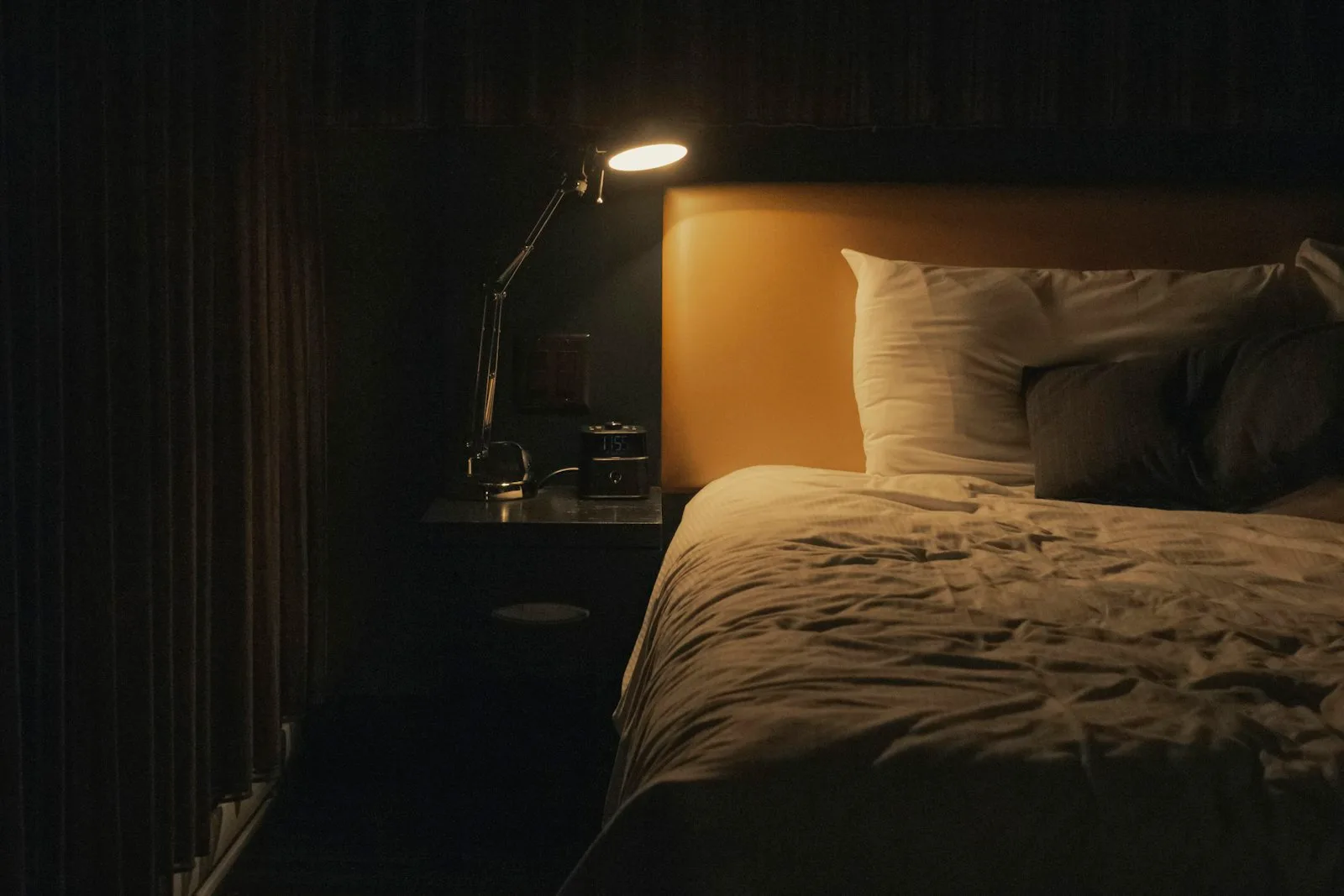
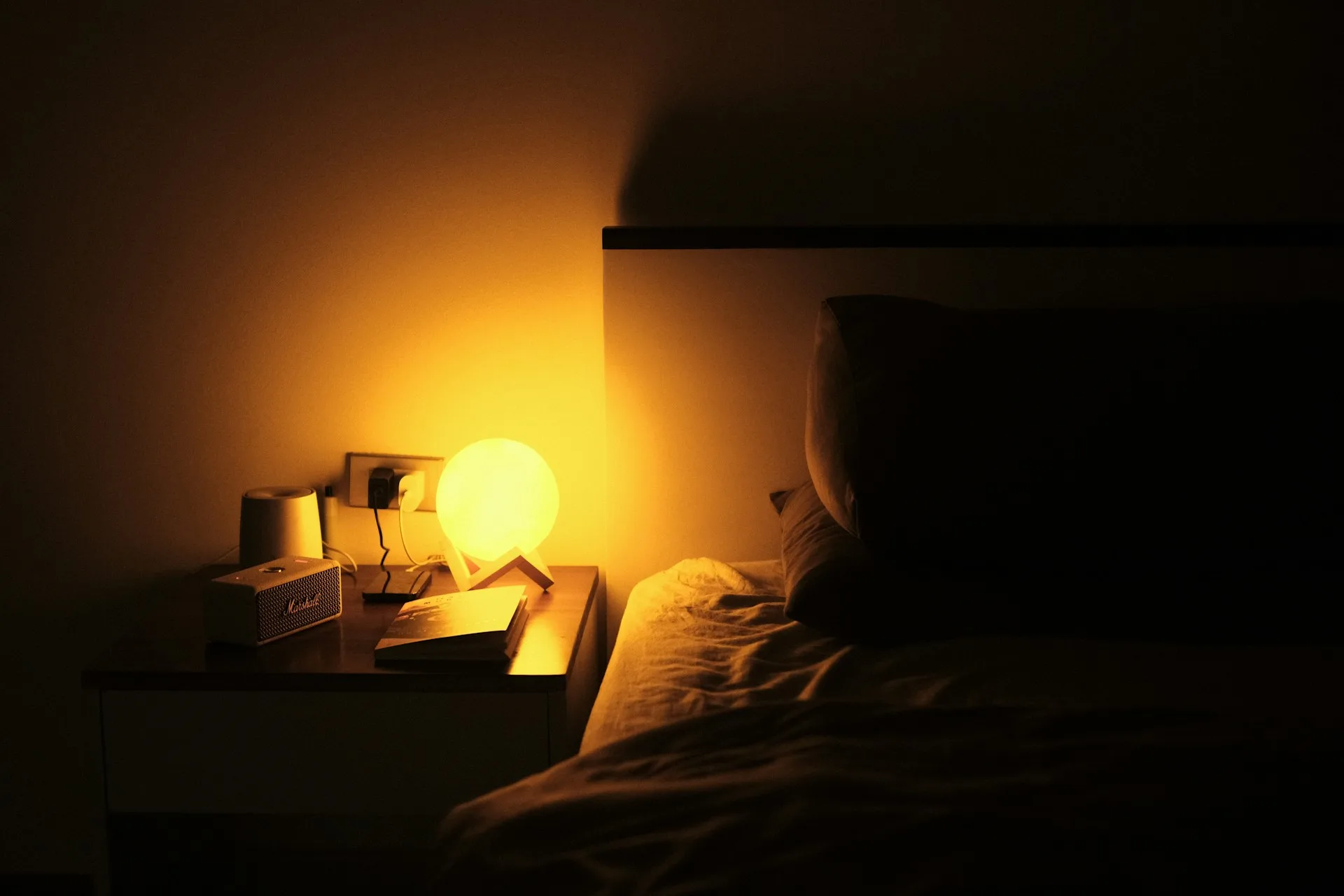
In practice, that means the last hour is not the time to catch up on email or scroll social media in bed. If you can’t put the phone away entirely, at minimum switch to night mode and lower the brightness as far as it will go. Better still: swap overhead white or blue-toned lighting for a single warm, dim lamp. Dim yellow and amber light has little effect on your circadian rhythm, which is exactly why it’s the standard recommendation for bedside lighting. The goal isn’t to be in total darkness by 10 p.m. — it’s to stop actively telling your brain it’s daytime an hour before you need it to believe otherwise.
Step 2: Lower Room Temperature and Brightness
Your body temperature naturally drops by a degree or two as part of falling asleep, and a warm room works directly against that process. Most sleep clinicians recommend keeping the thermostat between 65 and 68°F (18-20°C), with many settling on 65°F (18.3°C) as the commonly cited optimum — though individual comfort varies by a few degrees (Sleep Foundation; Cleveland Clinic). If you don’t control central heating or air conditioning, a fan, a lighter duvet, or cracking a window are reasonable substitutes.
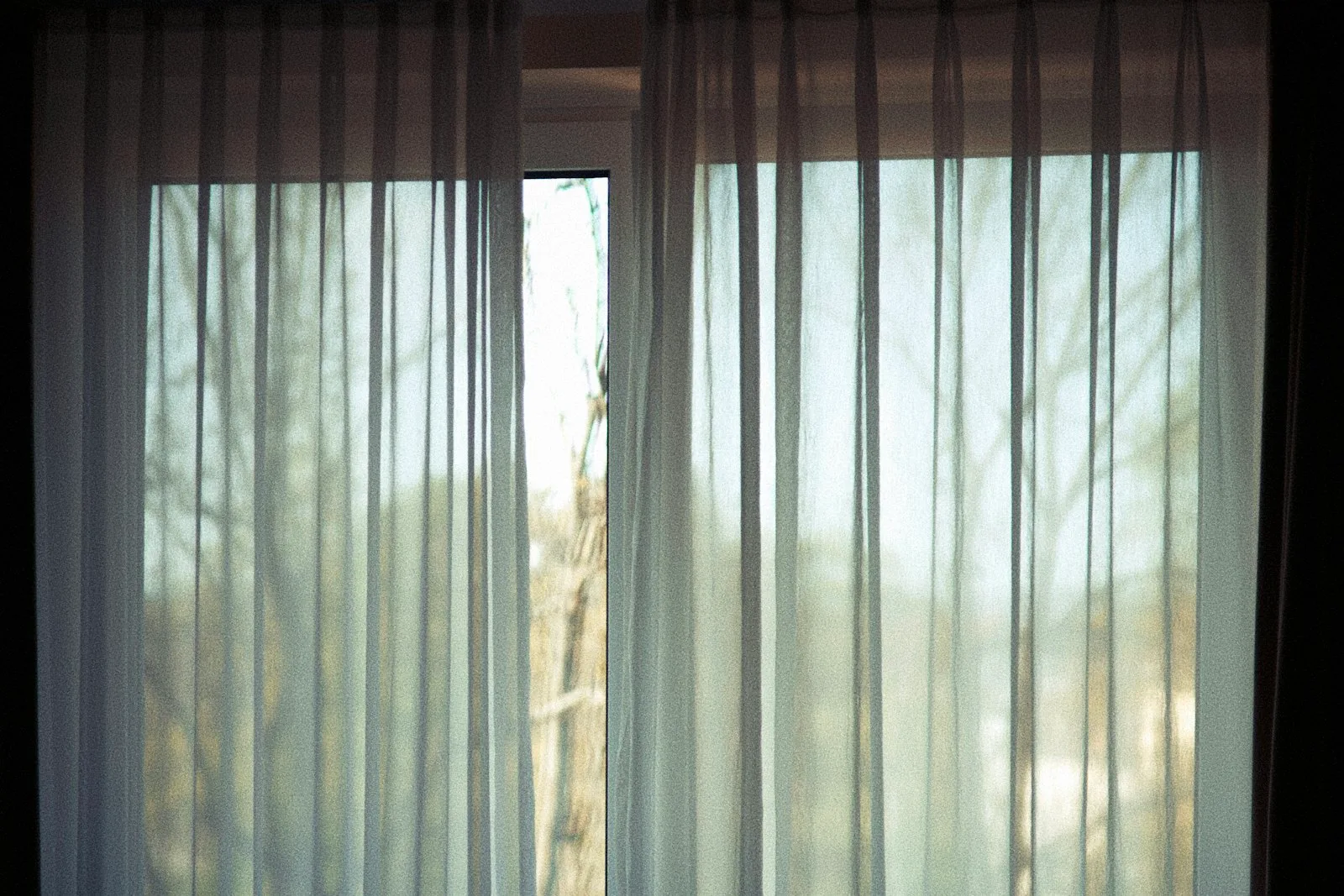
Darkness matters just as much as temperature. The CDC recommends a bedroom that is genuinely dark — no hallway light leaking under the door, no glowing electronics, no streetlight through thin curtains — as one of the core habits for better sleep, alongside keeping the room cool and quiet (CDC). Blackout curtains or a simple eye mask solve this cheaply if your bedroom faces a street or gets early morning sun. The combination of cool and dark isn’t a nice-to-have; it’s the environmental baseline most sleep guidance starts from (NHLBI — Your Guide to Healthy Sleep).
Step 3: Clear Your Mind and Use Ambient Sounds
Once the light and temperature are handled, the last obstacle is usually mental. If your brain is still running through tomorrow’s meeting or replaying an argument, no amount of blackout curtain is going to help. Harvard Health lists winding down with a calming, low-stimulation activity — reading, gentle stretching, or writing — as a core sleep hygiene practice, precisely because it gives your mind something finite to do instead of looping indefinitely (Harvard Health). A short brain dump — writing down whatever’s nagging at you and what you’ll do about it tomorrow — is a low-effort way to externalize the worry instead of carrying it into bed.
If sleep still isn’t coming after roughly 20 minutes, the most evidence-backed move is not to keep trying. The American Academy of Sleep Medicine’s stimulus-control approach instructs people to get out of bed when they’ve been lying awake too long, do something calm in another room until they feel drowsy, and only then return to bed — the logic being that staying and stewing trains your brain to associate the bed with frustration rather than sleep (AASM).
For the ambient part of the equation, consistent background sound — a fan, a white-noise machine, or pink noise — can help mask the sudden noises (a car outside, a partner shifting, a radiator clicking) that would otherwise pull you toward a brief awakening. The evidence here is genuinely mixed: some studies show people falling asleep meaningfully faster with white noise, while others find no benefit over a quiet room, and researchers are still working out whether the effect comes from masking disruptive sound or something more direct (Sleep Foundation; Sleep Foundation — White Noise). It’s worth experimenting with, not treating as guaranteed.
How to Track Your Sleep Habits
Here’s the problem with wind-down advice in general: you can follow all three steps perfectly and still have no idea whether they’re actually working, because the result — did I fall asleep faster tonight than last night — happens while you’re unconscious. Guessing is the default, and it’s a bad one.
This is where tracking earns its place, not as a gadget for its own sake but as the only way to close the loop on a habit change. An iPhone-only sleep tracker can tell you how long it actually took you to fall asleep, how many times you stirred overnight, and give you an overall sleep quality score — enough to see whether last night’s dimmer lamp and colder thermostat setting moved the needle at all. If you also wear an Apple Watch, pairing it adds REM, Deep, and Light sleep-stage detail on top, using heart rate and motion data collected while you sleep.
Snollo is built around this exact use case: it works fully on an iPhone alone for duration, snore and sound-event detection, and a nightly quality score, and it adds sleep-stage breakdown the moment you pair an Apple Watch — with no subscription required for that feature. All audio classification happens on-device, and your sleep history is stored in your own iCloud account under your own Apple ID, not on a company’s servers. If you’re curious how it compares to other options, our comparison of free sleep tracker apps breaks down what’s actually free versus paywalled across the category. For a deeper look at why a full night’s sleep can still leave you tired, see why you might still be tired after 8 hours of sleep, and for what REM, Deep, and Light sleep stages actually mean, see our full breakdown of sleep stages.
Download Snollo free on the App Store — track tonight’s wind-down routine and see if it actually changes how fast you fall asleep.
Frequently Asked Questions
Why can’t I fall asleep even though I am exhausted?
Being physically exhausted doesn’t override the two systems that actually control sleep onset: your circadian rhythm and your stress response. Scrolling on a bright phone within an hour of bed suppresses melatonin release and signals to your brain that it’s still daytime (Sleep Foundation). A warm, bright, or noisy room does the same thing physically, and racing thoughts do it mentally by keeping your mind engaged instead of winding down. You can be tired and still not be sleepy — those are two different states, and the last hour before bed is what closes the gap.
What is the best thing to do when you can’t fall asleep?
Get out of bed. The American Academy of Sleep Medicine’s stimulus-control approach instructs people who haven’t fallen asleep within about 20 minutes to leave the bed, do something calm and low-light in another room, and only return once they feel drowsy (AASM). Lying there getting frustrated trains your brain to associate the bed with wakefulness, which makes the problem worse over time, not better.
Does Snollo require an Apple Watch to track sleep stages?
No — Snollo works iPhone-only for sleep duration, snore and sound detection, and a nightly sleep quality score. Pairing an Apple Watch adds a further layer of detail: REM, Deep, and Light sleep-stage breakdown, estimated from heart rate and motion data while you sleep.
Is Snollo a free sleep tracker?
Yes. Snollo’s free tier includes Apple Watch sleep-stage tracking with no subscription required. All audio processing happens on your iPhone, and your sleep data is stored in your own iCloud account rather than on company servers.
Snollo does not diagnose or treat any medical condition. If you’re regularly lying awake for long stretches, or waking exhausted despite a consistent wind-down routine, talk to a doctor — persistent insomnia has treatable causes that a bedside lamp and a cooler thermostat can’t fix on their own.
Sources
- Blue Light: What It Is and How It Affects Sleep — Sleep Foundation
- The Best Temperature for Sleep — Sleep Foundation
- What’s the Best Temperature for Sleep? — Cleveland Clinic
- About Sleep: Tips for Better Sleep — CDC
- Your Guide to Healthy Sleep — NHLBI
- Sleep Hygiene: Simple Practices for Better Rest — Harvard Health Publishing
- How Noise Can Affect Your Sleep Satisfaction — Sleep Foundation
- What Is White Noise? — Sleep Foundation
- Cognitive-Behavioral Therapy for Insomnia — American Academy of Sleep Medicine
- When You’re Trying to Sleep but Your Mind Is Racing — Cleveland Clinic
Sources
- Blue Light: What It Is and How It Affects Sleep — Sleep Foundation
- The Best Temperature for Sleep — Sleep Foundation
- What's the Best Temperature for Sleep? — Cleveland Clinic
- About Sleep: Tips for Better Sleep — Centers for Disease Control and Prevention
- Your Guide to Healthy Sleep — National Heart, Lung, and Blood Institute
- Sleep Hygiene: Simple Practices for Better Rest — Harvard Health Publishing
- How Noise Can Affect Your Sleep Satisfaction — Sleep Foundation
- What Is White Noise? — Sleep Foundation
- Cognitive-Behavioral Therapy for Insomnia — American Academy of Sleep Medicine
- When You're Trying to Sleep but Your Mind Is Racing — Cleveland Clinic