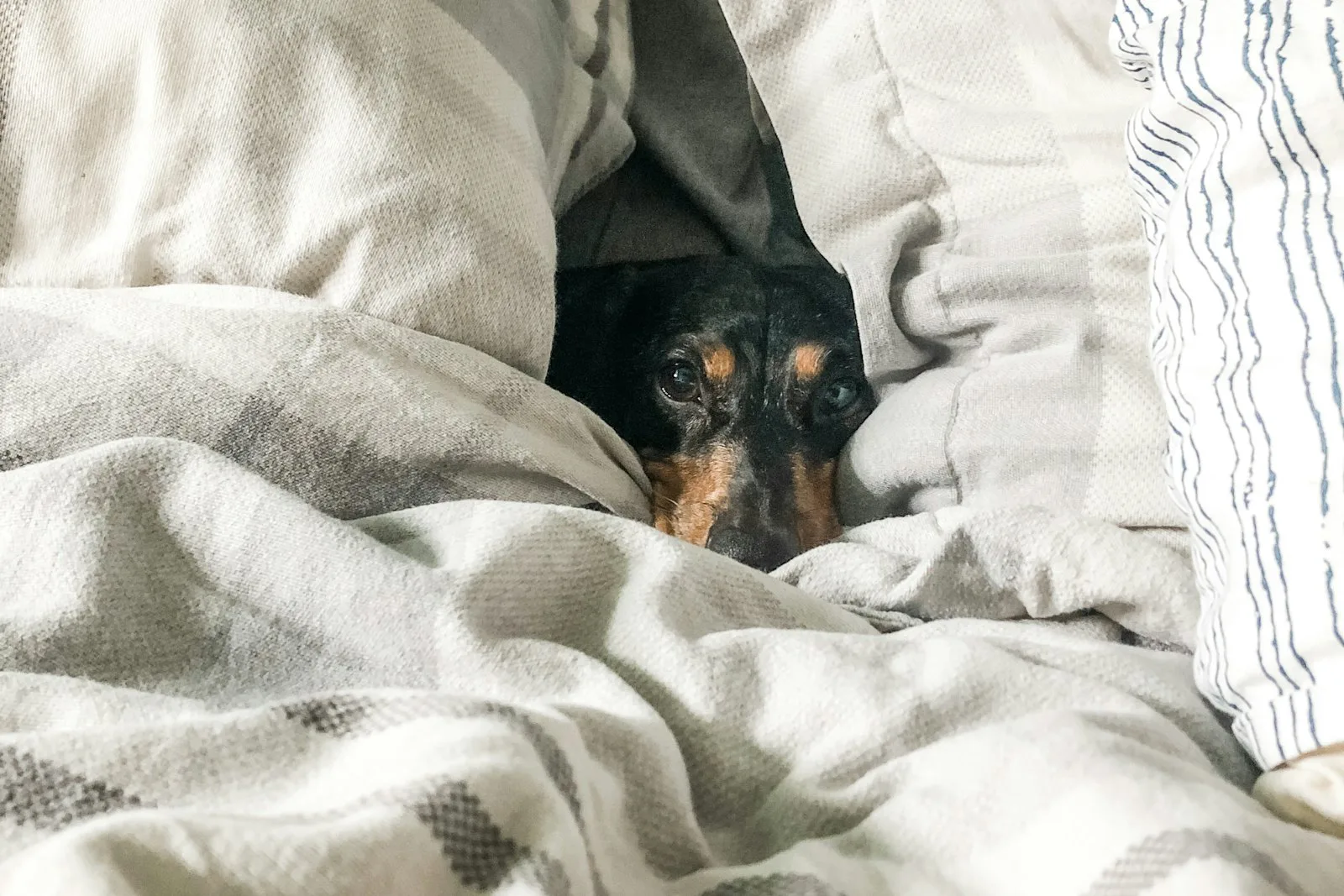
Being sleepy all day and then wide awake at bedtime feels contradictory, but it has several documented causes. This page goes through them using official sleep guidance, and sets out what that guidance says to do.
Quick Answer (TL;DR)
Common reasons are long or late daytime naps, a body clock that runs later than your schedule, and insomnia, which itself causes daytime tiredness. Sleep that is disrupted during the night can also leave you sleepy by day. Standard advice is to keep the same wake-up time every day, including weekends, get daylight, and limit naps. If it has gone on for months, the NHS advises seeing a GP.
Key Takeaways
- Late or long naps can work against night sleep. The NHLBI advises limiting naps or taking them earlier in the afternoon if you have trouble falling asleep, and keeping adult naps to no more than 20 minutes (NHLBI).
- A late body clock can produce exactly this pattern. In delayed sleep-wake phase, the sleep schedule runs two or more hours later than usual. Bedtime comes before your body is ready, and mornings come too early (AASM).
- Insomnia is defined partly by its daytime effects: fatigue, poor concentration, irritability and low energy. It counts as chronic when it happens at least three times a week for at least three months (AASM).
- Keep weekends close to weekdays. The NHLBI advises the same sleep schedule on weeknights and weekends, with no more than about an hour’s difference (NHLBI).
Why Am I Sleepy During the Day but Awake at Night?
1. Long or late naps
A nap that is too long or too late in the day can leave you less ready to sleep at bedtime. The NHLBI’s advice for people who have trouble falling asleep is to limit naps or take them earlier in the afternoon. It says adults should nap for no more than 20 minutes (NHLBI), and its sleep guide advises against naps after 3 p.m. (NHLBI, Your Guide to Healthy Sleep). The NHS insomnia advice goes further: do not nap during the day (NHS).
2. A body clock that runs late
In delayed sleep-wake phase, a circadian rhythm sleep disorder, your sleep schedule is delayed by two or more hours compared with usual norms. According to the AASM (Sleep Education):
- people with it tend to prefer late bedtimes and late wake-up times;
- sleep is often short during the work week and long at weekends;
- left to their own schedule, they sleep a normal amount and quality of sleep, just later.
Clinical reviews describe the result as chronic difficulty falling asleep, and waking up, at the times work or school require (review, 2023).
Only a sleep doctor can diagnose it. A milder, everyday version of the same mismatch, between weekday and weekend sleep timing, is covered in our article on social jetlag.
3. Insomnia
Insomnia is not only a night-time problem. The AASM describes it as difficulty falling asleep, staying asleep, or waking earlier than you want, despite allowing enough time in bed, together with daytime symptoms such as fatigue, trouble concentrating, irritability and low energy (AASM). So poor night sleep combined with daytime tiredness fits the AASM description of insomnia, though only a doctor can diagnose it. It is considered chronic when it occurs at least three times a week and lasts at least three months.
4. Sleep that is disrupted during the night
You can also be sleepy by day because your night sleep is being interrupted without your knowing. Sleep apnea is one example. The NHLBI lists breathing that stops and starts, loud snoring and gasping for air at night, together with daytime sleepiness. You may not know about the night-time symptoms until someone tells you, and not everyone who snores has sleep apnea (NHLBI). If you’re sleepy all the time rather than wide awake at night, see why you might want to sleep all the time and have no energy.
What Official Guidance Says to Do
These steps come from the NHLBI and the NHS:
- Keep the same wake-up time every day. The NHS advises waking up and getting out of bed at the same time every day (NHS). The NHLBI advises keeping weeknights and weekends within about an hour of each other (NHLBI).
- Get daylight. The NHLBI recommends getting outside in natural sunlight for at least 30 minutes a day (NHLBI).
- Limit naps: short and early, or none (see above).
- Go to bed only when you’re sleepy (NHS). If you are lying awake, see whether you should stay in bed if you can’t sleep.
More on daytime habits that affect how quickly you fall asleep: how to fall asleep faster.
How to See Your Own Pattern
Patterns like a late body clock or a big weekend shift only show up over several nights, so a record of your bedtimes and wake times is more useful than memory.
With Snollo, you tap Start at bedtime and the app records the night on your iPhone. The free tier keeps your full sleep history, so you can see how your bedtime and wake-up time move across the week. It also records snoring and other sounds and lets you play them back. Sleep stages are most accurate with an Apple Watch. Without one, Snollo estimates approximate stages from the iPhone’s microphone and motion sensors, with the iPhone on the mattress near you. Phone and watch stages are estimates; the most accurate way to measure sleep stages is an overnight sleep study (polysomnography), which records brain waves (EEG), eye movements (EOG) and muscle tone (EMG) (NHLBI). Snollo is not a medical device and does not diagnose any condition.
Download Snollo free on the App Store
When to Talk to a Doctor
The NHS advises seeing a GP about trouble sleeping if changing your sleeping habits has not helped, if you have had trouble sleeping for months, or if it is affecting your daily life in a way that makes it hard to cope (NHS).
Frequently Asked Questions
Should I nap if I can’t sleep at night?
Official advice is to limit naps if you have trouble sleeping at night. The NHLBI says to limit naps or take them earlier in the afternoon, and that adults should nap for no more than 20 minutes; its sleep guide also advises against naps after 3 p.m. The NHS insomnia advice is not to nap during the day.
Why am I wide awake at night?
Common reasons include long or late daytime naps, a body clock that runs later than your schedule (delayed sleep-wake phase), and insomnia. Only a doctor can tell which applies. If it has been going on for months, or changing your habits hasn’t helped, the NHS advises seeing a GP.
What is delayed sleep phase?
Delayed sleep-wake phase is a body-clock disorder in which your sleep schedule runs two or more hours later than usual. People with it find it hard to fall asleep at a normal bedtime and hard to wake up in the morning, but sleep a normal amount when they can follow their own schedule. It is diagnosed by a sleep doctor.
How long should a nap be?
The NHLBI says adults should nap for no more than 20 minutes, and that if you have trouble falling asleep at night, naps should be limited or taken earlier in the afternoon.
Snollo does not diagnose or treat any medical condition. This article summarizes guidance from official health sources for general information. If your sleep is affecting your daily life, talk to a doctor. If you have any doubts about how you feel or how you sleep, talk to a doctor or sleep specialist.
Sources
- Insomnia — American Academy of Sleep Medicine (Sleep Education)
- Delayed Sleep-Wake Phase — American Academy of Sleep Medicine (Sleep Education)
- Healthy Sleep Habits — NHLBI
- Delayed sleep-wake phase disorder and its related sleep behaviors in the young generation (review, 2023) — PMC, NIH
- Your Guide to Healthy Sleep — NHLBI
- Insomnia — NHS
- Sleep Apnea: Symptoms — NHLBI
- Sleep Studies — NHLBI
Sources
- Insomnia — American Academy of Sleep Medicine (Sleep Education)
- Delayed Sleep-Wake Phase — American Academy of Sleep Medicine (Sleep Education)
- Sleep Deprivation and Deficiency: Healthy Sleep Habits — National Heart, Lung, and Blood Institute
- Delayed sleep-wake phase disorder and its related sleep behaviors in the young generation (review, 2023) — PubMed Central, NIH
- Your Guide to Healthy Sleep — National Heart, Lung, and Blood Institute
- Insomnia — NHS
- Sleep Apnea: Symptoms — National Heart, Lung, and Blood Institute
- Sleep Studies — National Heart, Lung, and Blood Institute