Deep sleep has become the number everyone wants to maximize — the stage your tracker flags when it’s low and the one wellness articles credit for everything from memory to immune function. Some of that hype is earned: deep sleep genuinely matters. But “how much deep sleep do I need” doesn’t have a single answer, and chasing a target number can mislead you. Here’s what’s actually normal, what changes it, and how to read your own numbers without overreacting to a single night.
Quick Answer (TL;DR)
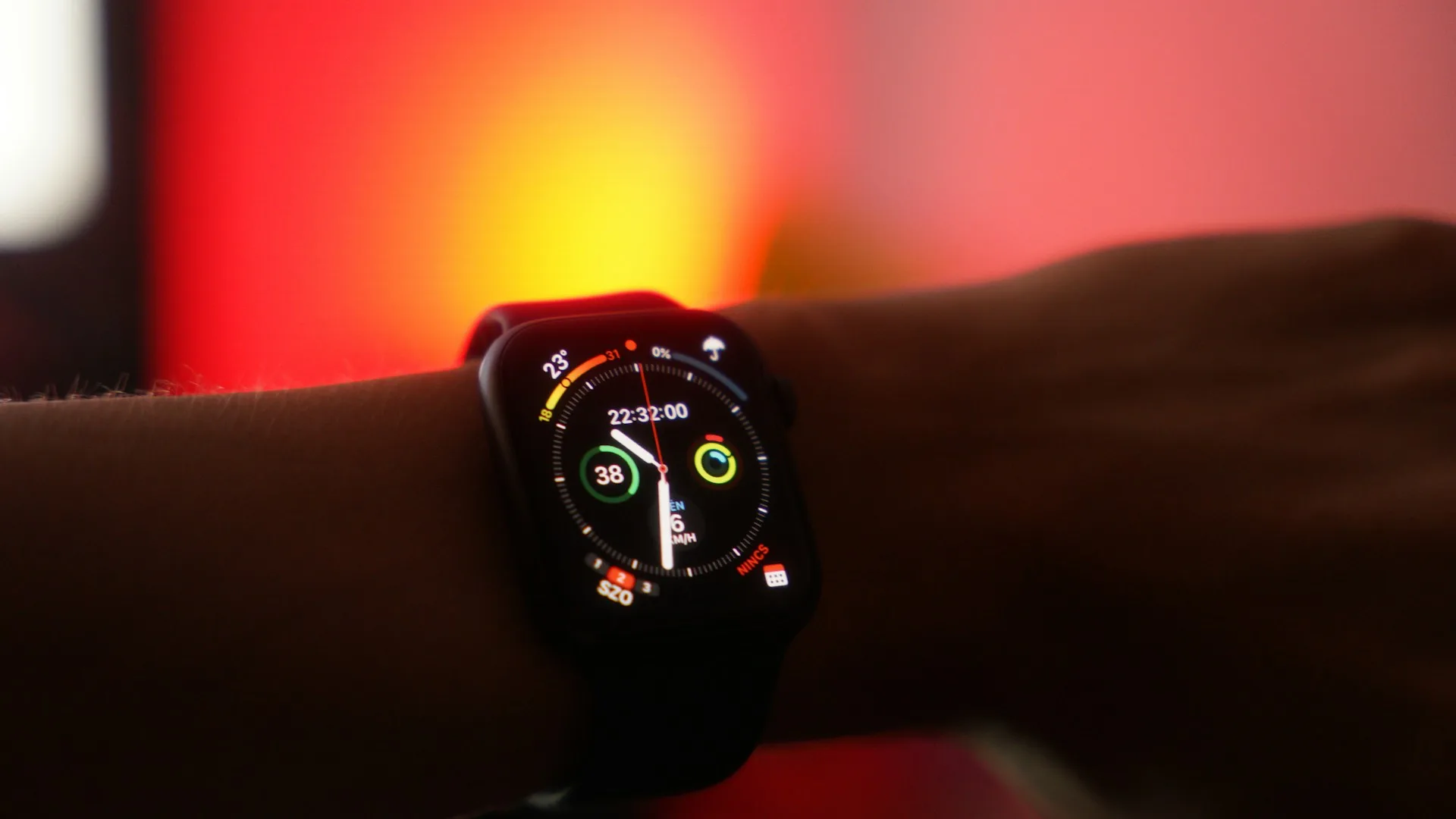
Most healthy adults spend about 10–20% of the night in deep sleep — roughly 40 minutes to just under 2 hours for a 7–8 hour night — and that percentage naturally declines with age. (Sleep Foundation) There’s no universal target you must hit; what matters is your own baseline and whether you wake restored. Deep sleep is disrupted by alcohol (which suppresses REM sleep and fragments the second half of the night), irregular schedules, late caffeine, and fragmented sleep from issues like undetected apnea. You can estimate your deep sleep at home with an Apple Watch–based tracker — not with lab precision, but accurately enough to see whether a change helps. Watch the trend over weeks, not any single night.
Key Takeaways
- Normal is a range, not a number: ~10–20% of total sleep, about 40 minutes to just under 2 hours for most adults. (Sleep Foundation)
- It declines with age — comparing your numbers to a much younger person’s is misleading. (PMC: Sleep and Human Aging)
- Trends beat single nights. One low-deep-sleep night is noise; a sustained drop is signal.
- Alcohol disrupts REM and second-half sleep quality — it speeds falling asleep and initially increases deep sleep, but suppresses REM and degrades sleep in the second half of the night. (PMC: Alcohol Disrupts Sleep Homeostasis)
- You can measure it at home. An Apple Watch tracker estimates stages well enough to spot patterns. See how accurate Apple Watch sleep tracking is.
What deep sleep is and why it matters
Sleep isn’t uniform. Across the night you cycle through light sleep, deep (slow-wave) sleep, and REM sleep, roughly every 80 to 100 minutes. (NHLBI) Deep sleep is the stage with the slowest brain waves and the hardest to wake from — and it’s where a lot of physical recovery happens: tissue repair, growth-hormone release, (PMC: Growth Hormone and Sleep) and clearing metabolic byproducts from the brain via the glymphatic system. (PMC: Brain Waste Removal System and Sleep) It’s also weighted toward the first half of the night, which is part of why a late bedtime or a fragmented early night costs you disproportionately. (NHLBI)
The reason “deep sleep” gets so much attention is that it’s the stage people most often come up short on without realizing it — and the stage most sensitive to the everyday things (alcohol, stress, inconsistent timing) that fragment sleep. (For how the three stages fit together, see REM, deep & light sleep explained.)
How much deep sleep is normal?
For healthy adults, deep sleep typically makes up about 10–20% of total sleep time. In a 7–8 hour night, that’s roughly 40 minutes to just under 2 hours. (Sleep Foundation) REM is a similar slice; the majority of the night is light sleep, which is normal and not a failing.
Two caveats make the “right number” softer than trackers imply:
- Age changes it. Deep sleep is highest in youth and declines steadily through adulthood. (PMC: Sleep and Human Aging) A healthy 50-year-old will usually have less deep sleep than a healthy 25-year-old, and that’s expected — not a problem to fix.
- Measurement is approximate. Consumer trackers estimate stages from heart rate and motion, not brain waves. The night-to-night number has error bars, which is exactly why the trend matters more than any single reading.
So the useful question isn’t “am I hitting 1.5 hours?” It’s “is my deep sleep stable around my own baseline, and do I wake feeling recovered?” (Related: what your sleep score actually means.)
What reduces deep sleep
If your deep sleep is consistently low for your age, these are the usual suspects:
- Alcohol. It may help you fall asleep and can initially increase deep sleep, but it suppresses REM sleep and significantly disrupts the second half of the night as it metabolizes — resulting in poorer overall sleep quality. (PMC: Alcohol Disrupts Sleep Homeostasis)
- Irregular sleep timing. Going to bed and waking at different times confuses your circadian rhythm and fragments deep sleep. Consistency is the single most underrated lever.
- Late caffeine. Caffeine has a half-life of roughly 2–12 hours (Sleep Foundation: Caffeine and Sleep) and can reduce the amount of slow-wave sleep you get; a controlled study found that 400 mg of caffeine taken 6 hours before bed still reduced total sleep time by over 40 minutes and significantly cut slow-wave sleep duration. (PMC: Caffeine Effects on Sleep)
- A warm or noisy room, and screen light late at night.
- Fragmented sleep from breathing problems. This is the one to take seriously. Obstructive sleep apnea is associated with decreased slow-wave sleep activity, and treating OSA with positive airway pressure has been shown to increase slow-wave activity — which is why some people get “enough” hours and almost no deep recovery. (PMC: OSA Treatment and Slow Wave Activity) (See why you’re still tired after 8 hours.)
How to get more — and how to know it worked
The interventions are unglamorous because they’re the ones that work: a consistent sleep/wake schedule, no alcohol close to bed, daytime exercise, a cool dark room, and limiting late caffeine. None of these are secrets. The part most people skip is verification — they try a change for one night, see a noisy number, and conclude it didn’t help.
Deep sleep varies enough night to night that you need several nights to judge anything. The practical approach: get a baseline, change one variable, and watch the trend across a week. An Apple Watch–based sleep tracker estimates your stages well enough to do this — and if you want snore detection and a sleep-quality view alongside stages, the free Snollo tier includes Apple Watch sleep stages without a subscription. (No watch? See the iPhone-only sleep tracker.) For the full comparison of options, see the best free sleep tracker apps.
And if your deep sleep is chronically low and you snore or wake unrefreshed, don’t just optimize habits — rule out the breathing angle first. The free STOP-BANG sleep apnea risk test takes about a minute and tells you whether the missing deep sleep might have a cause worth a doctor’s attention.
Sources
- How Sleep Works: Sleep Phases and Stages — NHLBI
- How Much Deep Sleep Do You Need? — Sleep Foundation
- Slow-Wave Sleep: An Overview — Sleep Foundation
- Sleep and Human Aging — PMC / NIH
- Alcohol Disrupts Sleep Homeostasis — PMC / NIH
- Caffeine and Sleep — Sleep Foundation
- Caffeine Effects on Sleep Taken 0, 3, or 6 Hours before Going to Bed — PMC / NIH
- Obstructive Sleep Apnea Treatment, Slow Wave Activity, and Amyloid-β — PMC / NIH
- Brain Waste Removal System and Sleep — PMC / NIH
- Complex Relationship Between Growth Hormone and Sleep — PMC / NIH
Sources
- How Sleep Works: Sleep Phases and Stages — National Heart, Lung, and Blood Institute (NHLBI)
- How Much Deep Sleep Do You Need? — Sleep Foundation
- Slow-Wave Sleep: An Overview — Sleep Foundation
- Sleep and Human Aging — PubMed Central / NIH
- Alcohol Disrupts Sleep Homeostasis — PubMed Central / NIH
- Caffeine and Sleep — Sleep Foundation
- Caffeine Effects on Sleep Taken 0, 3, or 6 Hours before Going to Bed — PubMed Central / NIH
- Obstructive Sleep Apnea Treatment, Slow Wave Activity, and Amyloid-β — PubMed Central / NIH
- Brain Waste Removal System and Sleep — PubMed Central / NIH
- Complex Relationship Between Growth Hormone and Sleep in Children: Insights, Discrepancies, and Implications — PubMed Central / NIH