Quick Answer (TL;DR)
Your brain and body cycle through four sleep stages — Wake, Light (N1/N2), Deep (N3), and REM — roughly every 90 minutes across four to six cycles per night. Deep sleep dominates the first half of the night and is when growth hormone is released and glymphatic clearance of brain metabolic waste is highest. REM sleep dominates the second half and is strongly associated with emotional memory processing. You need both. Alcohol before bed suppresses REM in the first half of the night; caffeine can reduce slow-wave (deep) sleep even when you feel able to fall asleep. An Apple Watch paired with Snollo can track these stages across nights to help you spot what is actually changing your sleep.
If you’ve ever opened a sleep tracking app and stared at a chart labeled “REM, Deep, Light,” there’s a good chance you weren’t sure which of those is actually the good kind. Most people aren’t. The terminology is technical, the percentages feel arbitrary, and the apps rarely explain why any of it matters.
Here’s the short version: you need all of them. Each stage does something the others can’t replace, and the way they unfold across the night is more important than any single number.
The four stages, in order
A normal night moves through four states in roughly 90-minute cycles, four to six times per night, according to the NHLBI:
Wake — brief awakenings during the night are normal and usually not remembered. If your tracker shows more than around 10% of the night as wake, something is fragmenting your sleep.
Light sleep (Stage N1 and N2) — the majority of a typical adult night, with N2 alone accounting for roughly half of total sleep time according to the Sleep Foundation. Light sleep is often dismissed as “not real sleep,” which is wrong. During N2 in particular, the brain generates bursts of synchronized oscillatory activity called sleep spindles; research has directly linked spindle activity to consolidation of motor and declarative memories.
Deep sleep (Stage N3, also called slow-wave sleep) — the hardest stage to wake from, characterized by large, slow delta-wave brain activity. Growth hormone secretion during sleep is strongly coupled to slow-wave activity. The brain’s glymphatic system — which clears metabolic waste including amyloid-beta via cerebrospinal fluid circulation — is most active during slow-wave sleep, though much of this evidence still comes from animal models and the mechanism in humans is an area of active research. Sleep also exerts a broad regulatory influence on immune function, with slow-wave sleep contributing to the pro-inflammatory hormonal environment that supports adaptive immunity; sleeping subjects showed a twofold increase in antigen-specific antibody titres after hepatitis A vaccination compared with subjects kept awake. Deep sleep makes up roughly 13–23% of total sleep time and is weighted toward the first half of the night.
REM sleep (Rapid Eye Movement) — the brain becomes nearly as active as during wake, while most skeletal muscles are temporarily paralyzed (atonia), with the eyes and respiratory muscles largely spared. Most vivid dreaming happens here. REM sleep is strongly associated with emotional memory consolidation — sleep deprivation studies using fMRI show substantially heightened amygdala reactivity to negative stimuli and reduced connectivity between the amygdala and prefrontal cortex. REM makes up around 20–25% of total sleep and is weighted toward the second half of the night.
Why the order matters
Cycles aren’t equal. Across the night, deep sleep is more prevalent in early cycles and REM sleep in later cycles — the duration of deep sleep in each successive cycle decreases while the duration of REM increases. This pattern is under both homeostatic (sleep pressure) and circadian control.
This has a practical implication that catches a lot of people off guard:
If you skip the last 90 minutes of sleep, you’re not skipping a random slice — you’re disproportionately skipping REM. That’s why cutting sleep from 8 hours to 6 hours doesn’t just make you tired; it specifically reduces time in the stage most involved in emotional processing and memory consolidation.
The reverse is also true: if you go to bed late but wake at the normal time, you may compress the first deep-sleep cycles — where growth hormone release and early physical recovery occur. This is consistent with why a late night followed by a normal wake-up can feel physically worse even after adequate total sleep.
How much you should be getting
For a healthy adult sleeping 7–8 hours:
| Stage | Approximate share | What consistently low amounts may indicate |
|---|---|---|
| Light | ~50% of total sleep | Hard to evaluate alone; light sleep is the normal majority |
| Deep | ~13–23% (roughly 55–110 min) | Low deep sleep can result from alcohol, caffeine, sleep apnea, or aging |
| REM | ~20–25% (roughly 90–120 min) | Low REM is associated with alcohol, sleep deprivation, circadian disruption |
| Wake | Ideally <10% | Higher wake time suggests fragmented sleep — possible apnea, stress, or environment |
These are normative ranges, not strict cutoffs. Individual variation is real. Deep sleep also declines progressively with age — a gradual biological change rather than a single threshold event, though the decline becomes more pronounced in the 60s and beyond.
Common reasons your stages are off
A few patterns show up consistently in sleep research:
- Alcohol within a few hours of bed. At moderate to high doses, alcohol suppresses REM in the first half of the night, followed by a REM rebound with more fragmented sleep later. The net effect is a disrupted sleep architecture overall.
- Caffeine in the afternoon or evening. Caffeine can reduce slow-wave sleep even when you feel able to fall asleep normally — the ability to fall asleep fades faster than caffeine’s metabolic half-life. The Sleep Foundation recommends avoiding caffeine at least 8 hours before bed; cutting off at roughly 2 PM is given as a practical example for a 10 PM bedtime.
- Inconsistent bedtime. Your circadian rhythm partitions deep sleep and REM based on time-of-night cues. Shifting your schedule disrupts the normal sequencing of cycles.
- Sleep apnea. Repeated breathing pauses cause micro-arousals that fragment sleep and reduce time spent in deep stages. The tracker will often show high wake or light time and low deep-sleep numbers. If snoring is loud and you wake unrefreshed, this is worth discussing with a clinician — see the sleep apnea risk test.
- Late or vigorous evening exercise. A systematic review found that lengthy evening workouts delay melatonin rhythm and raise core body temperature, which can affect sleep onset; long-term morning exercise was associated with improved sleep quality. The evidence on shorter evening workouts is more mixed, with some studies showing no significant harm to sleep architecture.
How to actually track your stages
Sleep stage detection requires physiological signals — heart rate, heart rate variability, breathing rhythm. Phones alone can infer sleep timing and quality from audio and motion, but they can’t reliably distinguish REM from deep sleep without those signals.
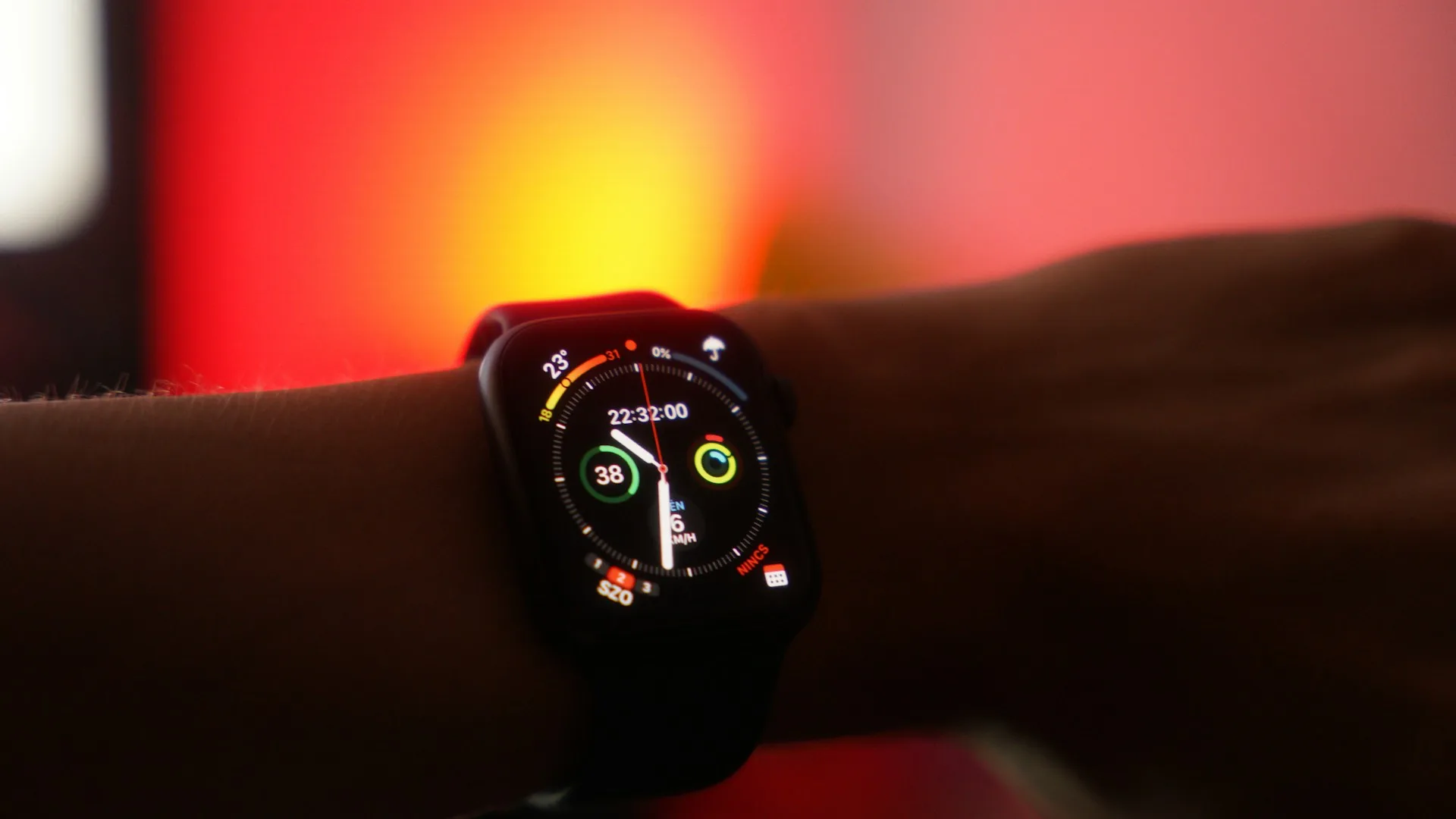
This is where wrist-worn wearables earn their keep. In a 2024 study validating six commercial wearables against polysomnography, the Apple Watch Series 8 correctly identified approximately 69% of REM epochs and 51% of deep sleep (N3) epochs — not perfect, but sufficient to track meaningful trends across nights and identify when something changes your sleep architecture. (For context, inter-rater agreement among trained PSG technicians themselves reaches only around κ = 0.75.)
If you don’t have an Apple Watch, an iPhone-only sleep tracker can still give you sleep duration, audio event detection (snoring, sleep talking, coughing), and a quality score. You won’t see the stage breakdown without a wrist-based sensor — but if you only have one piece of equipment, the iPhone is the more important one because it captures sound, which the watch can’t. (For a comparison of tracking options, see the free sleep tracker roundup.)
Download Snollo free on the App Store — works with iPhone alone, adds REM, Deep, and Light stages when you pair an Apple Watch. Snollo uses the Apple ID you already have; sleep data stays in your own iCloud.
Key Takeaways
- Sleep cycles through four stages — Wake, Light (N1/N2), Deep (N3), and REM — roughly every 90 minutes, four to six times per night.
- Deep sleep (N3) is concentrated in the first half of the night; REM sleep expands in the second half. Both distributions are driven by circadian and homeostatic mechanisms.
- Growth hormone secretion is strongly coupled to slow-wave (deep) sleep. Glymphatic waste clearance is also highest during deep sleep, though much of this evidence is still from animal models.
- REM sleep is strongly associated with emotional memory consolidation; sleep deprivation impairs amygdala regulation and reduces memory performance.
- N2 sleep spindles are directly linked to motor and declarative memory consolidation — light sleep is not “wasted” sleep.
- Alcohol (moderate-to-high doses) suppresses REM in the first half of the night. Caffeine reduces slow-wave sleep even without obviously preventing sleep onset.
- Apple Watch identifies approximately 69% of REM epochs and 51% of deep sleep epochs correctly versus polysomnography — useful for tracking trends, not a clinical diagnostic tool.
- Deep sleep declines gradually with age; this is a normal biological process, not pathology, though it becomes more pronounced from the 60s onward.
- The value of tracking is identifying what in your day correlates with changes in your sleep architecture — not fixating on any single nightly number.
Sources
- Stages of Sleep — Sleep Foundation
- Physiology of Sleep — PMC/NIH
- Alcohol disrupts sleep homeostasis — PMC/NIH
- Caffeine and Sleep — Sleep Foundation
- Sleep and Emotional Memory Processing — PMC/NIH
- NREM2 and Sleep Spindles Are Instrumental to the Consolidation of Motor Sequence Memories — PMC/NIH
- Sleep and immune function — PMC/NIH
- Glymphatic System Dysfunction: A Novel Mediator of Sleep Disorders — PMC/NIH
- Sleep Inertia — Sleep Foundation
- Timing of Deep and REM Sleep in Young Healthy Adults — PMC/NIH
- A performance validation of six commercial wrist-worn wearable sleep-tracking devices — PMC/NIH
- Sleep in the Context of Healthy Aging and Psychiatric Syndromes — PMC/NIH
- Effects of exercise timing and intensity on physiological circadian rhythm and sleep quality — PMC/NIH
- Stages of Sleep — NHLBI/NIH
- Circadian and Homeostatic Control of REM Sleep — PMC/NIH
Sources
- Stages of Sleep — Sleep Foundation — Sleep Foundation
- Physiology of Sleep — PMC/NIH — PubMed Central / NIH
- Alcohol disrupts sleep homeostasis — PMC/NIH — PubMed Central / NIH
- Caffeine and Sleep — Sleep Foundation — Sleep Foundation
- Sleep and Emotional Memory Processing — PMC/NIH — PubMed Central / NIH
- NREM2 and Sleep Spindles Are Instrumental to the Consolidation of Motor Sequence Memories — PMC/NIH — PubMed Central / NIH
- Sleep and immune function — PMC/NIH — PubMed Central / NIH
- Glymphatic System Dysfunction: A Novel Mediator of Sleep Disorders — PMC/NIH — PubMed Central / NIH
- Sleep Inertia — Sleep Foundation — Sleep Foundation
- Timing of Deep and REM Sleep in Young Healthy Adults — PMC/NIH — PubMed Central / NIH
- A performance validation of six commercial wrist-worn wearable sleep-tracking devices — PMC/NIH — PubMed Central / NIH
- Sleep in the Context of Healthy Aging and Psychiatric Syndromes — PMC/NIH — PubMed Central / NIH
- Effects of exercise timing and intensity on physiological circadian rhythm and sleep quality — PMC/NIH — PubMed Central / NIH
- Stages of Sleep — NHLBI/NIH — National Heart, Lung, and Blood Institute / NIH